
Sweepers are one of the most common cleaning equipment used for hard surface and low-pile carpet cleaning. They are primarily used to remove dirt and dust from floors, helping to maintain a clean and attractive appearance.
Maintenance personnel have two main types of sweepers to choose from when cleaning a facility: ride-on sweepers and walk-behind sweepers. While both types of sweepers are capable of performing the cleaning job, the choice depends primarily on the area being cleaned.
Factors to Consider When Choosing a Ride-On Sweeper
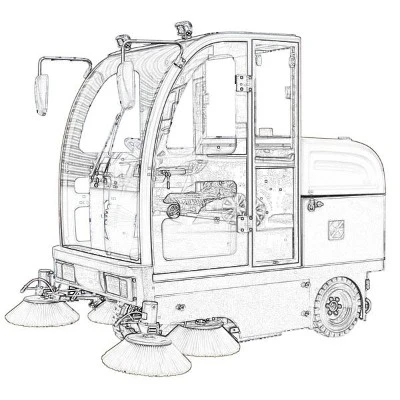
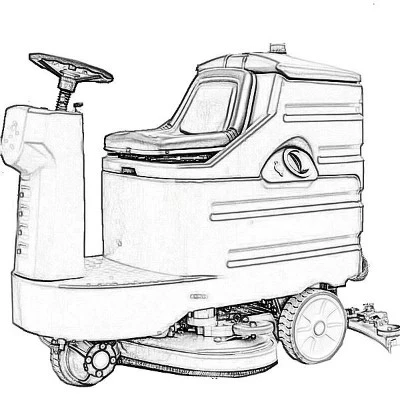
Ride-on sweepers are typically larger and designed to clean larger areas more quickly. As the name suggests, ride-on sweepers feature a seat, and the operator uses a steering wheel to maneuver the sweeper throughout the cleaning area.
Sweepers sweep floors, removing dust and debris. Some sweepers are often equipped with dual brushes near the front of the machine, which can be adjusted to maintain optimal pressure and handle uneven floor surfaces.
Ride-on sweepers are either battery-powered, LPG-powered, or diesel-powered.
Factors to Consider When Choosing a Walk-Behind Sweeper
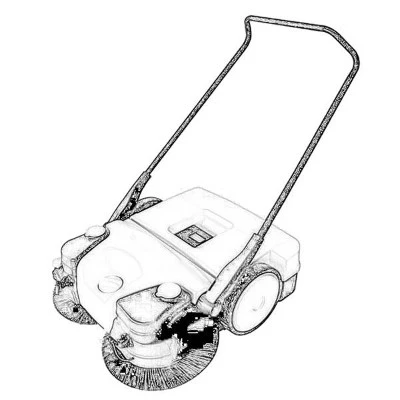
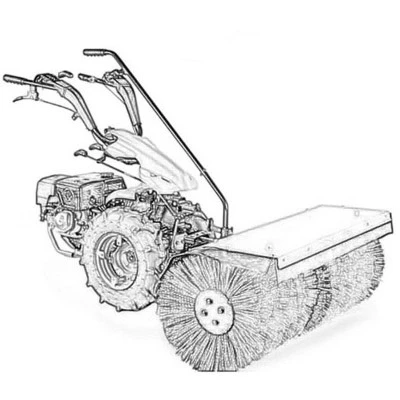
Unlike ride-on sweepers, walk-behind sweepers operate more like vacuums. They aren't mounted on a machine, but rather are manually pushed around the area they clean. Their compact size allows them to access tight spaces that some ride-on sweepers can't, and these machines often have a larger hopper capacity for collecting dust and debris.
While ride-on sweepers are best suited for cleaning large areas, walk-behind sweepers are better suited for cleaning small paths and smaller areas. This isn't to say they can't clean large areas; it just takes longer than a ride-on sweeper.
So, what factors should you consider when choosing between a ride-on or walk-behind sweeper?
Cleaning Productivity
Perhaps the biggest factor to consider when choosing a sweeper type is the space you need to clean. Keep in mind that a ride-on sweeper can have a cleaning width more than double that of a walk-behind sweeper, making it better suited for cleaning larger areas. Some walk-behind sweepers can only clean about 2,000 square meters per hour (about four times the size of a basketball court), while some ride-on sweepers can clean over 7,000 square meters per hour. Under the right circumstances, a ride-on sweeper can clean faster and more efficiently.
Cleaning Frequency
While ride-on sweepers are ideal for increased cleaning efficiency, they tend to be larger and generally unsuitable for daily use. Walk-behind sweepers, on the other hand, are more compact and easier to pull out of the janitor's closet for more routine cleaning. This isn't to say that ride-on sweepers can't be used daily, but they're better suited for occasional deep cleaning. Another advantage of walk-behind sweepers is that they can be used both indoors and outdoors.
Cleaning Area
Do you need to clean large open areas or small paths and tight spaces? A ride-on sweeper is best for the former, as we mentioned earlier in this article, due to its increased efficiency. For tighter spaces, a smaller walk-behind sweeper is more suitable.